
If you work in transportation, you’ve probably heard people use inventory and fixed assets almost interchangeably. And honestly, it’s an easy mistake to make. Both involve tracking equipment, parts, and materials that keep vehicles on the road. Sometimes they’re even in the same place—like spare parts riding around in the back of a truck.
But while inventory and fixed assets might look similar operationally, they’re very different when it comes to accounting, tax treatment, and financial reporting. Treating them the same can create real problems: misclassified expenses, inaccurate depreciation, compliance headaches, and financial reports that don’t quite add up.
So, let’s break it down in plain language—what each one is, how they’re different, and why getting the classification right is so important.
The Basics: Inventory vs. Fixed Assets
At a high level, the difference comes down to how long you expect to use something and how it contributes to your business over time.
Inventory: The parts and supplies you use every day
Inventory includes the items you go through regularly to keep your fleet running. Think:
- Filters
- Brake pads
- Tires
- Engine parts
- Fluids, tools, and other consumables
These are short-term resources. You buy them, store them, use them, and replace them—sometimes quickly, sometimes slowly, but they’re not meant to last for years. Because of that, inventory is considered a current asset.
From an accounting standpoint, inventory sits on your balance sheet until it’s used. Once it’s consumed or sold, it becomes an expense in that same period. Simple, clean, and designed to reflect day-to-day operations.
Fixed assets: The equipment that drives your business
Fixed assets are the big-ticket items that your business relies on for the long haul. In transportation, this usually includes:
- Trucks
- Buses
- Trailers
- Forklifts
- Heavy equipment
These assets stay in service for years, not weeks or months. Because they provide long-term value, they’re capitalized instead of expensed immediately. Their cost is spread out over time through depreciation, matching the expense to the revenue the asset helps generate.
Here’s the key distinction:
A truck is a fixed asset. The parts inside it are inventory.
A Simple Example: One Truck, Two Asset Types
Let’s say you have a service truck in your fleet.
That truck itself is a fixed asset. It’s recorded in your fixed asset system, assigned a useful life, and depreciated over time—maybe five, seven, or ten years. You might be tracking it in something like Sage Fixed Assets, monitoring depreciation, maintenance history, and eventual disposal.
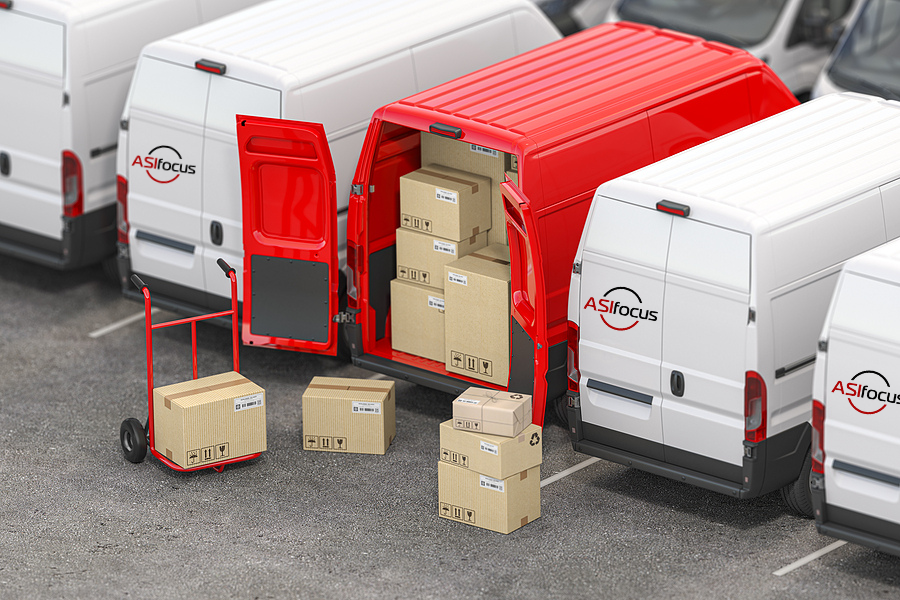
Now open the back of that same truck.
Inside, you’ve got spare filters, belts, brake components, and tools. Those items are inventory. They’re tracked separately, recorded as current assets, and expensed as soon as they’re used on a job.
They travel together. They support the same operation. But from an accounting perspective, they live in two very different worlds.
Understanding that distinction is critical, especially as your fleet grows and your financial reporting becomes more complex.
Accounting and Tax Treatment: Where the Differences Really Matter
This is where inventory and fixed assets truly diverge—and where mistakes can get expensive.
Inventory accounting
Inventory is recorded as a current asset and expensed when it’s used or sold. Because inventory typically turns over quickly, this approach keeps your financial statements aligned with reality.
You’re matching the cost of parts and supplies to the period in which they’re actually consumed. That means cleaner expense tracking, more accurate margins, and fewer surprises at month-end.
Fixed asset accounting
Fixed assets follow a completely different path. Instead of expensing the full cost upfront, you capitalize the asset and depreciate it over its useful life.
This spreads the cost across multiple fiscal years, which:
- Improves financial accuracy
- Aligns costs with revenue generation
- Supports proper tax treatment and compliance
Depreciation schedules, asset lives, and disposal rules all come into play here. And if a fixed asset is mistakenly treated like inventory—or vice versa—it can throw off your books and raise red flags during audits.
Why Your Systems Need to Talk to Each Other
In transportation, inventory and fixed assets are tightly connected operationally, even if they’re different on paper. That’s why disconnected systems can quickly become a problem.
Your accounting team, operations team, and asset managers all need visibility into what’s been purchased, what’s in use, and how it’s being reported. When systems don’t communicate, you’re left manually reconciling data—and that’s where errors creep in.
An integrated ERP like Sage Intacct helps you track inventory and supplies in real time, giving you clear visibility into what you have and how it’s being used. At the same time, Sage Fixed Assets manages the full lifecycle of your capital equipment, from acquisition and depreciation to retirement and disposal.
When these systems work together, you can:
- Link trucks and equipment to the inventory they consume
- Maintain accurate depreciation schedules
- Reduce manual data entry and reconciliation
- Produce audit-ready financials with confidence
It’s not just about efficiency—it’s about control, accuracy, and compliance across your entire operation.
Clearer Reporting, Smoother Audits, Better Insight
It’s easy to see why inventory and fixed assets get lumped together in transportation. They move through the same workflows, support the same vehicles, and sometimes even share the same physical space.
But from an accounting and tax standpoint, they’re fundamentally different. Treating them as the same can lead to misclassified expenses, missed depreciation, and financial reports that don’t tell the full story.
By understanding the difference—and using connected systems like Sage Intacct and Sage Fixed Assets—you can keep every part of your operation aligned. The result is clearer reporting, smoother audits, and better insight into where your money is going.
When inventory and fixed assets are classified correctly, your financials work the way they’re supposed to—and your business is better positioned to move forward with confidence. Let us help you. Contact us or schedule your free consultation today.